Sunday, 17 September 2017

THE CRITIC AS HOST--J. HILLIS MILLER

J H Miller.jpg

THE CRITIC AS HOST
J. Hillis Miller

[Critical summary and analysis by Dr. S. Sreekumar. Exclusively meant for students of Indian Universities]

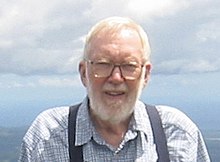
J. Hillis Miller

Biographical note

Joseph Hillis Miller, Jr. (1928) is an important humanities and literature scholar. He was among the pioneers in introducing phenomenology and deconstruction to Anglo-American audience.

From 1952 to 1972, Miller taught at Johns Hopkins University. In 1972, he joined Yale University where he taught for fourteen years. At Yale, he worked alongside prominent literary critics like Paul de Man and Geoffrey Hartman, where they were collectively known as the Yale School of deconstruction1.

Wednesday, 9 August 2017

The Insistence of the Letter in the Unconscious--Jacques Lacan


The Insistence of the Letter in the Unconscious

Summary of the essay—Lecture notes by S. Sreekumar

                       PART II

“The Insistence of the letter in the Unconscious” was originally delivered as a lecture at the Sorbonne in 1957.

David Lodge writes about the apparent difficulty of understanding Lacan thus:

“Lacan was a notoriously, wilfully difficult writer, and the present editor (Lodge himself) certainly does not claim fully to understand everything in this essay. The algebraic formulae for metaphor and metonymy, for instance, seem designed to mystify and intimidate rather than to shed light.”


Summary of the essay

Monday, 7 August 2017

The Insistence of the Letter in the Unconscious--Jacques Lacan


The Insistence of the Letter in the Unconscious


Summary of the essay in two parts

Part I 

A General Assessment of Lacan 

[ It is hoped that this introduction will provide an overview of the main ideas propounded by Lacan]

Study materials for research scholars of Indian Universities.
Dr. S. Sreekumar


JACQUES LACAN (1901 – 81)

Introduction

Lacan is the most important psychoanalyst since Freud. Lacan’s works have changed the discipline both as a theory of the mind and as clinical practice so much so that over 50 % of the world’s analysts now employ Lacanian methods.

Thursday, 27 July 2017

The Resistance to Theory--Paul de Man


The Resistance to Theory
Paul de Man
Study materials for research scholars of Indian Universities.
Dr. S. Sreekumar

Paul de Man (December 6, 1919 – December 21, 1983) was one of the most prominent literary critics in the United States who succeeded in bringing German and French philosophical approaches into Anglo-American literary studies and critical theory. De Man’s companionship with Jacques Derrida proved very influential as both took up the epistemological difficulties inherent in any textual, literary, or critical activity. This approach aroused considerable opposition, which de Man attributed to "resistance" inherent in the difficult enterprise of literary interpretation itself.

Thursday, 4 May 2017

THE VICTORIAN AGE--Blamires

THE VICTORIAN AGE

 Blamires
M. Phil English, Bharathiar University--Blamiers—
Approaches--Unit III
Summary by Dr. S. Sreekumar

Syllabus for Unit III
The Romantic Age (Blamires, pp 217-380)
The Victorian Age
The Twentieth Century I: The Early Decades
The Twentieth Century II: Post-war Developments


Introduction


The Victorian Age was a period of consolidation in terms of peace and prosperity, in terms of wealth and power and in terms of artistic productivity. The rule of Queen Victoria began with the stage coach and ended with a network of railways. It was comparatively an age of peace though the Crimean War (1853-56) and the Indian Mutiny (1857-58) can be cited as exceptions. On the Origin of Species  by Darwin opened up debate in the intellectual circles. The Oxford movement by Newman created much confusion in religion. Though there were many doubts and uncertainties in the Victorian Age, these can never be compared to the tumultuous and catastrophic events of the twentieth century. Thus the twentieth century looks back at the Victorian Period as a stable era.